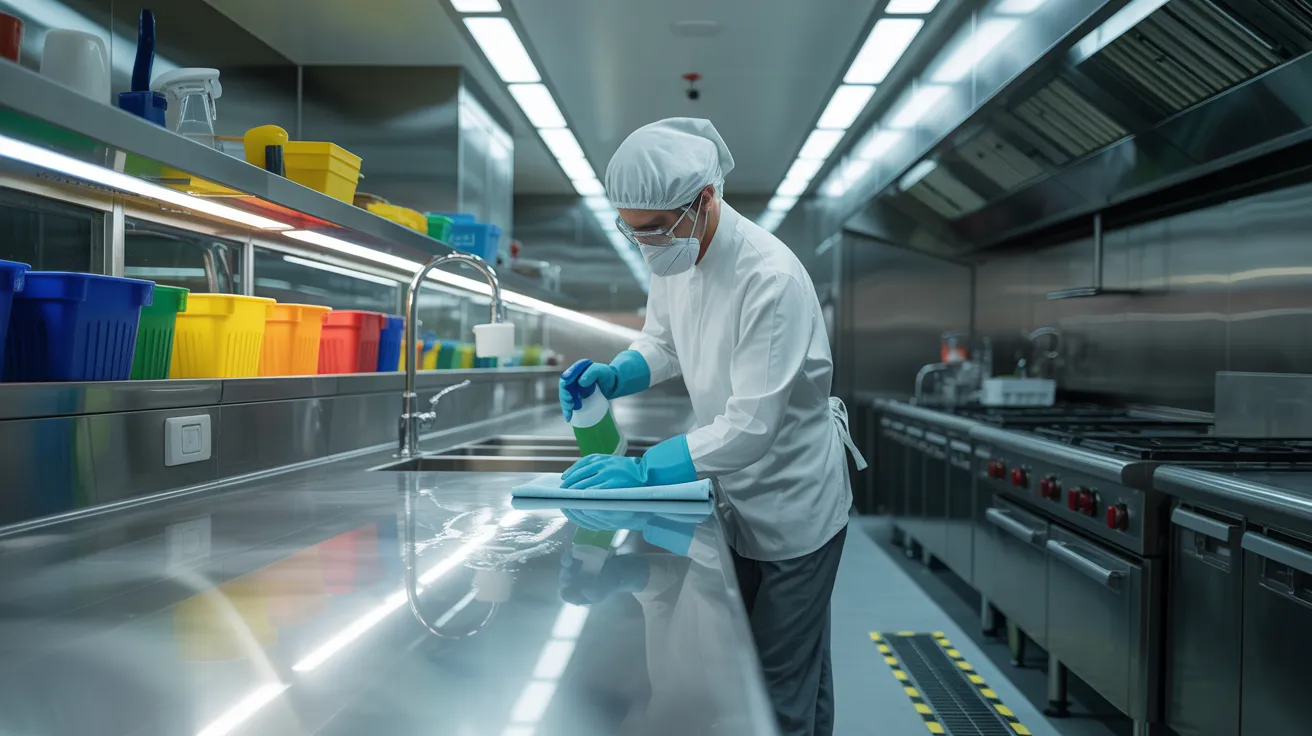
Professional sanitation and food hygiene professionals in Brampton support restaurants, commissaries, bakeries, warehouses, and mobile food services staying compliant. They decontaminate high-contact points, food contact areas, equipment, floors, drains, restrooms, and food handling spaces using certified products, at correct dilution, and documenting contact times. You need regular sanitation based on risk, volume, allergens, and regulatory assessments, plus documented proof backing HACCP, audits, and regulatory adherence. The following information outlines what strong sanitation programs should include.
Key Takeaways
- Brampton's food safety cleaning professionals clean for restaurants, grocery departments, commissaries, warehouses, bakeries, schools, mobile vendors, and allergen-sensitive operations.
- They clean high-touch surfaces, food-contact equipment, kitchens, floors, drains, restrooms, and storage areas using compartmentalized approaches to reduce cross-contamination.
- Qualified specialists check proper chemical concentration, appropriateness, and contact time, then document completion with tests, assessments, and corrective-action records.
- Everyday, recurring, and annual tasks distributed by section make up cleaning schedules built on hazard, throughput, switches, incidents, and regulations.
- Prioritize contractors showing HACCP, public-health understanding, safety training instruction, insurance, endorsements, color-coded tools, and compliance-ready maintenance documentation.
Food Safety Cleaning Requirements for Brampton Facilities
Brampton venues that manage, store, prepare, package, or offer food require sanitation protocols. Implement it if your business is falls under public health inspections, food codes, or HACCP requirements. The obligation covers dining establishments, employee cafes, food distributors, market sections, meat shops, fish counters, local shops, and commercial kitchens.
Compliant food safety cleaning is furthermore essential in warehouses, food manufacturing plants, cold storage sites, retail bakeries, school nutrition programs, banquet halls, and meal delivery hubs. Portable and seasonal operations apply similarly, examples including catering vehicles, festival sellers, and pop-up stands. Your establishment must have recorded sanitation procedures if your workers work with ingredients, section finished dishes, heat items, or keep allergens organized. In Brampton, hygiene continues to be not voluntary; it represents lawful, operational, and customer protection adherence.
What Do Brampton Cleaning Professionals Handle?
Professional cleaning services specializing in Brampton disinfect high-contact surfaces, kitchen facilities, floors, and sanitary facilities to satisfy food safety standards and health requirements. Emphasis on these spaces stems from extreme cross-contamination risk, injury hazards, and compliance issues.
By knowing exactly what gets cleaned, you can make sure your operation's sanitation protocols satisfy all operational and regulatory requirements.
Emphasizing High-Touch Surface Disinfection
establish how regularly each point is cleaned
confirm effective sterilization
Kitchens, Floors, and Restrooms
Brampton cleaning services focus on kitchens, floors, and restrooms as each zone involves distinct food safety, slip-and-fall, and wellness risks. In industrial kitchens, you need degreasing on cook lines, equipment exteriors, drains, prep surfaces, and splash zones to minimize bacterial growth and pest activity.
Floor care that is documented should equally be anticipated. Technicians clean and remove buildup from grout, tile, and vinyl flooring, then apply proper moisture management so you can limit falls and maintain code-compliant conditions. They also handle entryways where moisture and debris migrate indoors.
Restroom sanitation involves sanitizing touchpoints, fixtures, partitions, dispensers, and waste containers, restocking supplies and controlling odours. They also service restaurant moprooms, where chemical storage, sink hygiene, and drainage conditions can affect sanitation compliance and staff safety daily.
The Importance of Food Safety Cleaning in Brampton
In Brampton, you must maintain sanitary cleaning practices to satisfy health code requirements and pass inspections. You also reduce cross-contamination by cleaning and sanitizing food-contact surfaces, equipment, and high-touch areas correctly. Most importantly, you safeguard public health by lowering the risk of foodborne illness in your facility.
Food Safety Regulations
Because Brampton food businesses operate under strict public health standards, food safety cleaning directly influences your capacity to satisfy health code requirements, ensure the safety of customers, and eliminate enforcement action. You must maintain hygienic food handling zones, verifiable cleaning logs, safe chemical management, and documented employee protocols that meet municipal and provincial inspection expectations.
Inspectors review your operation to determine that your cleaning procedures maintains protected inventory management, equipment sanitation, garbage disposal, and washroom maintenance.
Cross-Contamination Prevention
Following regulatory requirements depends on your ability to prevent cross-contamination in routine food work and sanitation. You should isolate raw items from prepared foods, disinfect work areas after use, and maintain separation of cleaning products from food. Clear procedures reduce transfer risks and promote steady regulatory adherence.
You could implement allergen segregation to stop main allergens from reaching common areas, containers, or machinery. Apply separate boards, color-marked equipment, and rigorous tool identification so team members avoid blending products during preparation or service. Enforce washing hands following raw meat, seafood, eggs, or allergen-containing products. Change wiping cloths regularly, and check sanitizer strength with test strips. When employees learn these procedures every shift, you develop a more sanitary, secure business that meets Brampton's food safety expectations daily.
Community Health Safety
When food safety cleaning deteriorate, you don't only face inspection setbacks—you raise the likelihood of foodborne illness affecting customers, staff, and the larger Brampton community. You also weaken your role in safeguarding community wellness, especially in high-traffic food premises where pathogens travel quickly through surfaces, equipment, and touchpoints.
You need sanitation procedures that eliminate contaminants, sanitize correctly, and confirm effectiveness. That means following contact times, using approved disinfectants, recording cleaning times, and educating employees to meet regulatory standards. These controls support disease prevention by reducing pathogens before they contaminate surfaces or food. In Brampton, strong sanitation protects vulnerable populations, prevents disease spread, and helps you demonstrate due diligence. When you clean to standard, you don't just meet regulations—you actively reduce risk and support safer food service citywide.
Why Is Cleaning Essential for Food Safety Compliance?
Strict sanitation practices promote food safety compliance by minimizing contamination hazards, limiting pathogen development, and maintaining your facility's adherence to sanitation requirements under HACCP-based programs and public health regulations. You validate that food-handling surfaces remain visibly clean and microbiologically controlled, supporting documented preventive controls and inspection readiness.
Cleaning strategies additionally bolster allergen control by clearing residues that can provoke undeclared allergen exposure.
How Ought You Schedule Commercial Cleaning Work?
Cleaning plans are most effective when you set them according to risk levels, output volume, and compliance needs rather than using only a fixed calendar alone.
Use weekly or monthly schedules
Selecting the Right Brampton Cleaning Experts: Key Considerations
Begin by evaluating providers based on sanitation compliance standards—not solely on price alone. You should confirm that each organization comprehends CFIA, public health, and HACCP-based requirements applicable to your facility. Request insurance certificates, WHMIS compliance, staff training documentation, and oversight procedures. Assess whether technicians recognize cross-contamination risks, chemical handling protocols, and verifiable sanitation records.
Additionally, you need to evaluate operational reliability and accountability. Obtain references from food facilities in Brampton, then review response times, corrective measures, and communication practices. Verify the company conducts supplier reviews and can deliver compliance-ready records when inspectors or external parties need proof. Verify equipment upkeep, color-coded equipment are applied correctly, and site-specific hazards are identified. A capable service protects compliance, product quality, and your brand reputation.
Which elements are part of a hygiene cleaning program?
Create a written plan that defines every sanitation duty, guideline, and expectation prior to beginning production. You should list cleaning schedules, authorized products, mixing ratios, exposure periods, equipment, and testing procedures for each area, section, and machine. Be sure to include pre-operational inspections, corrective actions, and employee training requirements.
Your framework should also cover cross-contamination controls, waste handling, pest-prevention measures, and documented schedules for restrooms, drains, floors, and food-contact areas. Specify how you'll distinguish raw from ready-to-eat operations, support ingredient tracking, and copyright accurate allergen labeling through validated cleaning between product changes. You should define accountability, preserve signed records, and check results against regulatory standards, HACCP controls, and customer requirements. When gaps appear, adjust procedures immediately and re-educate staff.
Popular Inquired Inquiries
Can cleaning services support nighttime operations in Brampton properties?
If you manage regulated spaces, you'll also need documentation that support audits and ensure compliance.
Are hazard containment services provided from sanitation professionals?
Yes, you can find many Brampton cleaning experts who provide emergency spill response solutions. They handle contamination, evaluate dangers, contain contamination, and start rapid decontamination to reduce exposure and avoid operational disruption. You should confirm response times, professional credentials, safety procedures, and waste management. If your facility must comply with industry standards, choose a provider that documents incidents, follows compliant standards, and enables compliance verification.
Will eco-friendly disinfectants sanitize safely surfaces contacting food?
Absolutely, natural disinfectants remain secure for food preparation areas when you select items marked food-safe and satisfying regulatory requirements. You must validate application timing, concentration levels, and rinse requirements ahead of deployment. Plant-derived products reduce toxic chemical contact, though you require confirmation of performance against relevant pathogens. For preserving residue-free areas, implement precise manufacturer instructions and ensure the disinfecting agent complies with food industry regulations.
Can sanitation programs be modified for production fluctuations?
Certainly, cleaning plans respond to seasonal variations readily. Modify schedules, personnel, cleaning agents, and testing procedures to correspond with seasonal workflows while maintaining regulatory compliance. Lower equipment downtime through scheduling disinfection during equipment transitions, maximum output, and equipment use patterns. Further update standard operating procedures, training, and environmental testing to address periodic risks, novel allergens, or increased soil loads. Ongoing evaluations ensure the schedule effective.
Do professional cleaning services educate staff on sanitation best practices?
Absolutely, professional cleaning companies frequently provide employee education on sanitation best practices. Your team receives instruction on correct chemical handling, dwell times, cross-contamination prevention, machine takedown, and documentation. They generally match guidance with HACCP, GMP, and CFIA or local public health standards. Many conduct health inspections to verify compliance, identify gaps, and reinforce presentation corrective actions. This helps you maintain consistent procedures, pass inspections, and lower contamination dangers routinely.
Conclusion
When you partner with Brampton food safety and commercial cleaning specialists, you don't just tidy up—you keep your operation audit-prepared and your protocols above board. From processing areas to kitchen spaces, every clean surface and maintained area minimizes unwelcome guests and avoid expensive problems. By scheduling service at the right intervals and adhering to a detailed cleaning schedule, you safeguard staff, patrons, and your brand image. In a strict regulatory setting, clean spaces are essential—they're part of doing business right.